Water purification for disaster aid and for local supply.
PAUL® can supply up to 300 people daily with clean water while requiring neither electricity nor chemicals. Cutting-edge technology inside, extremely simple to use. For NGOs, disaster relief and aid projects worldwide.
In many places around the world, available water sources are permanently contaminated with dirt, particles and pathogens. In disaster situations, circumstances can change in an instant – wells and water reservoirs become contaminated and access to safe water is lost.
Where PAUL can help
PAUL is deployed when water is available but not safe to use.
Natural disasters & emergency aid
After earthquakes, floodings and other disasters, water supply infrastructure often collapses first. PAUL is immediately deployable and ready to use without infrastructure.
Refugee & displaced camps
Camps and temporary shelter often lack water infrastructure. PAUL provides reliable water supply even under difficult conditions – robust and low-maintenance.
Long-term local supply
In projects with permanent need, PAUL can purify water over years. For efficiency and convenience, a PAUL Station can be set up.
Visible results
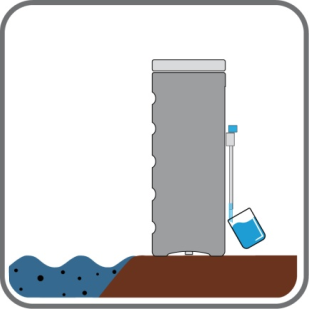
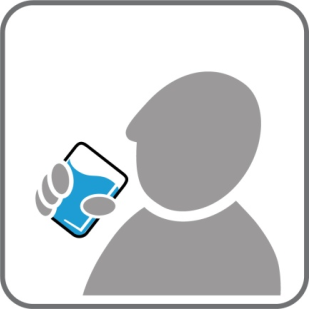
PAUL turns contaminated raw water into clear, drinkable water.
What PAUL can do
99.99% pathogen reduction*
PAUL retains bacteria and viruses mechanically. No electricity or chemicals required. Operation and maintenance are simple, no training required.
*As tested by Fresenius Institute and German Federal Environmental Agency
Minimum 1,200 liters per day
Enough for the supply of up to 300 people per PAUL per day.
23kg, easy to transport
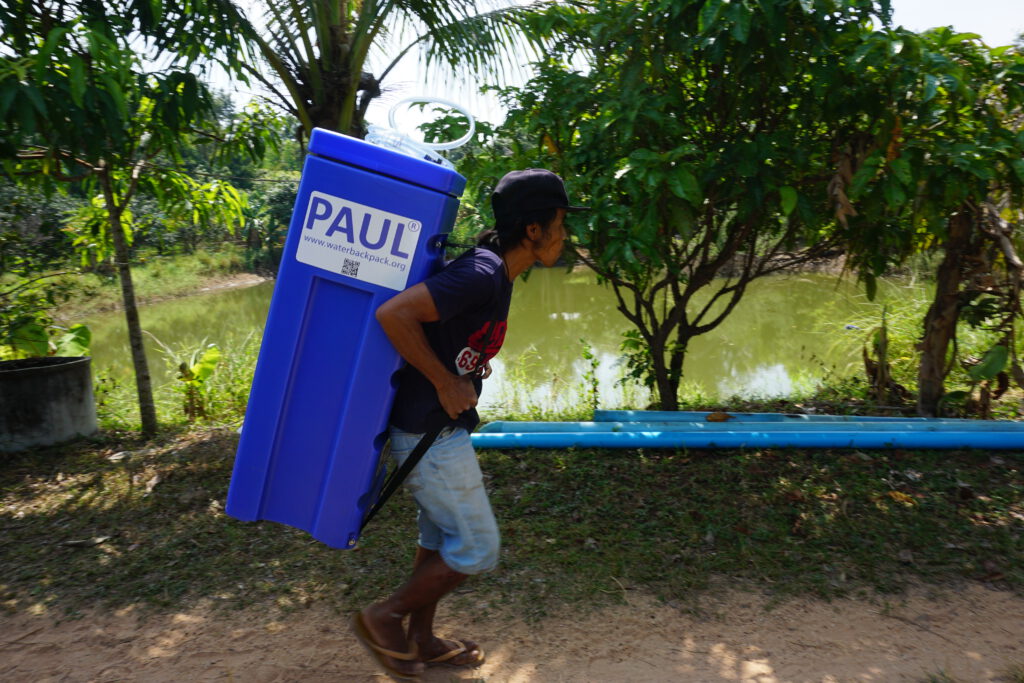
PAUL is equipped with backpack straps to be carried, even into areas without road access.
10+ years lifetime
Developed to last 10+ years for long-term deployments.
Gravity-based
Electricity-independent. For deployments in places without infrastructure.
PAUL in the field
In the field, simple, self-reliant and efficient routines are everything.
Intuitive to use, language-independent
Pictograms on PAUL show how to use it. Developed to be easily understood and taught, even in changing teams or in situations lacking a common language.
Reliability through simplicity
Sturdily and simply built, no need for consumables or (dis-)assembly. Reliable under difficult conditions.
Low maintenance effort
For maintenance, rinsing PAUL is enough. Just fill PAUL normally and then empty it via the bottom outlet. Once a week or less frequent, depending on local conditions.
PAUL is simple to use
1
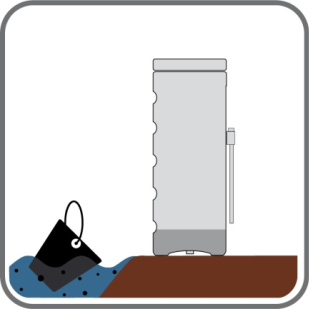
Collect water
Collect water from an available source, e.g. rivers, streams, lakes, wells or rainwater tanks.
2
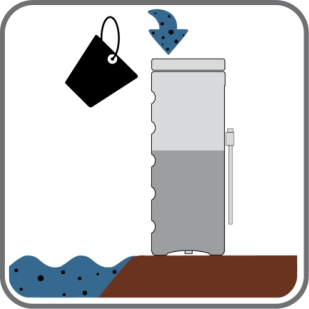
Pour into PAUL
Pour water into PAUL at the top. Gravity does the rest.
3
Open valve
Open the valve at the front hose. Purification starts immediately.
4
Tap clean water
Tap clean water for drinking, food preparation and basic need.
Deployed in over 95 countries
PAUL is a tried-and-tested product. More than 5,000 units have been deployed around the world – in disaster regions, aid projects and remote places across many continents.
(Zoom in to see the different countries of deployment)
Developed at the University of Kassel
PAUL was developed and scientifically tested by Prof. Dr. Franz-Bernd Frechen at the Department of Sanitation and Environmental Engineering of the University of Kassel, Germany. The water backpack has been deployed for many years in projects around the world – by organisations such as Doctors Without Borders, Engineers Without Borders, WUS e.V., and many more.
Permanent supply? PAUL Station.
For communities, municipalities and operators with larger needs, PAUL can be installed permanently – as a PAUL Station.
This website uses cookies to improve your experience. We'll assume you're ok with this, but you can opt-out if you wish.AcceptRejectRead More
Privacy & Cookies Policy
Privacy Overview
This website uses cookies to improve your experience while you navigate through the website. Out of these, the cookies that are categorized as necessary are stored on your browser as they are essential for the working of basic functionalities of the website. We also use third-party cookies that help us analyze and understand how you use this website. These cookies will be stored in your browser only with your consent. You also have the option to opt-out of these cookies. But opting out of some of these cookies may affect your browsing experience.
Necessary cookies are absolutely essential for the website to function properly. This category only includes cookies that ensures basic functionalities and security features of the website. These cookies do not store any personal information.
Any cookies that may not be particularly necessary for the website to function and is used specifically to collect user personal data via analytics, ads, other embedded contents are termed as non-necessary cookies. It is mandatory to procure user consent prior to running these cookies on your website.