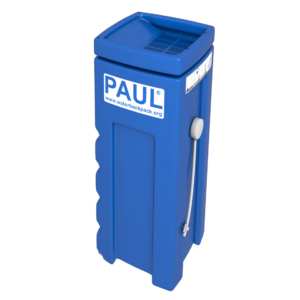
PAUL stands for Portable Aqua Unit for Lifesaving and is a gravity-driven water treatment system. Inside, a membrane module retains turbidity, particles, as well as bacteria and viruses from untreated water.
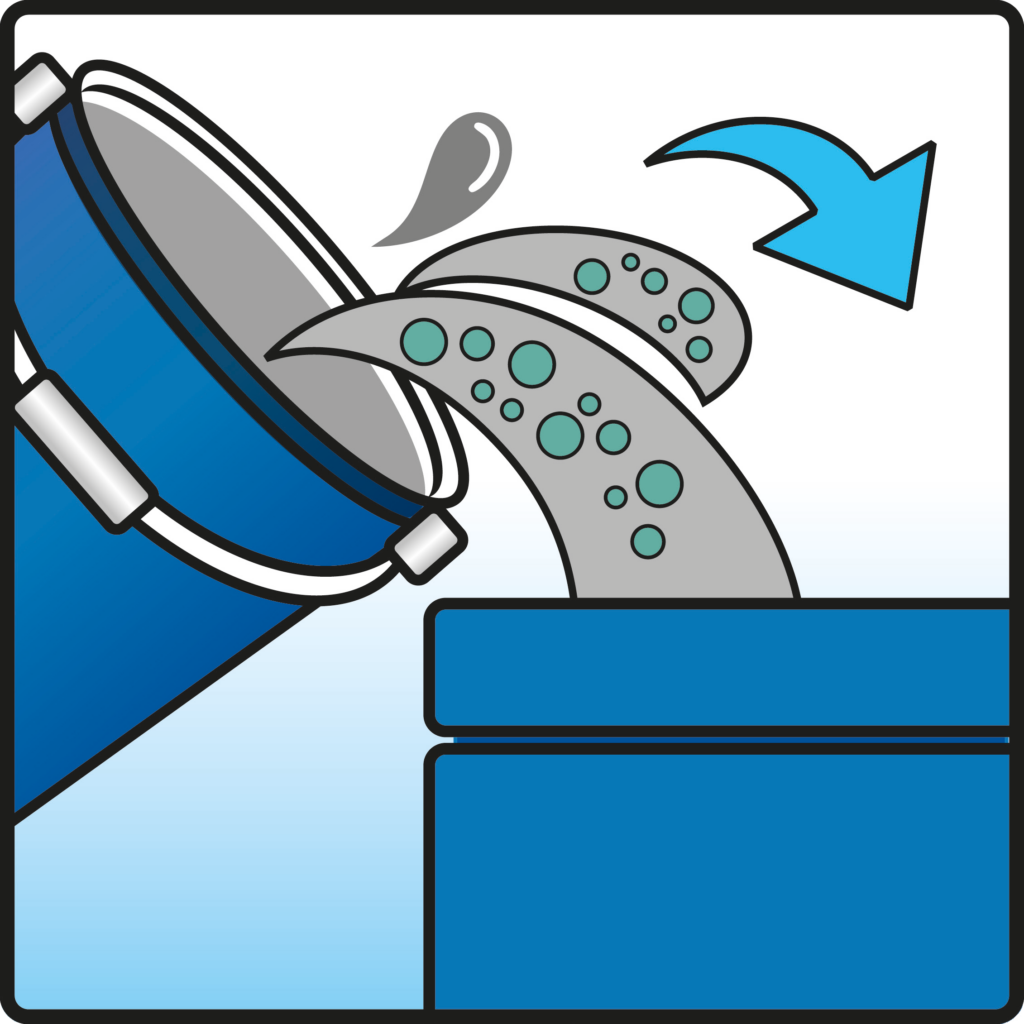
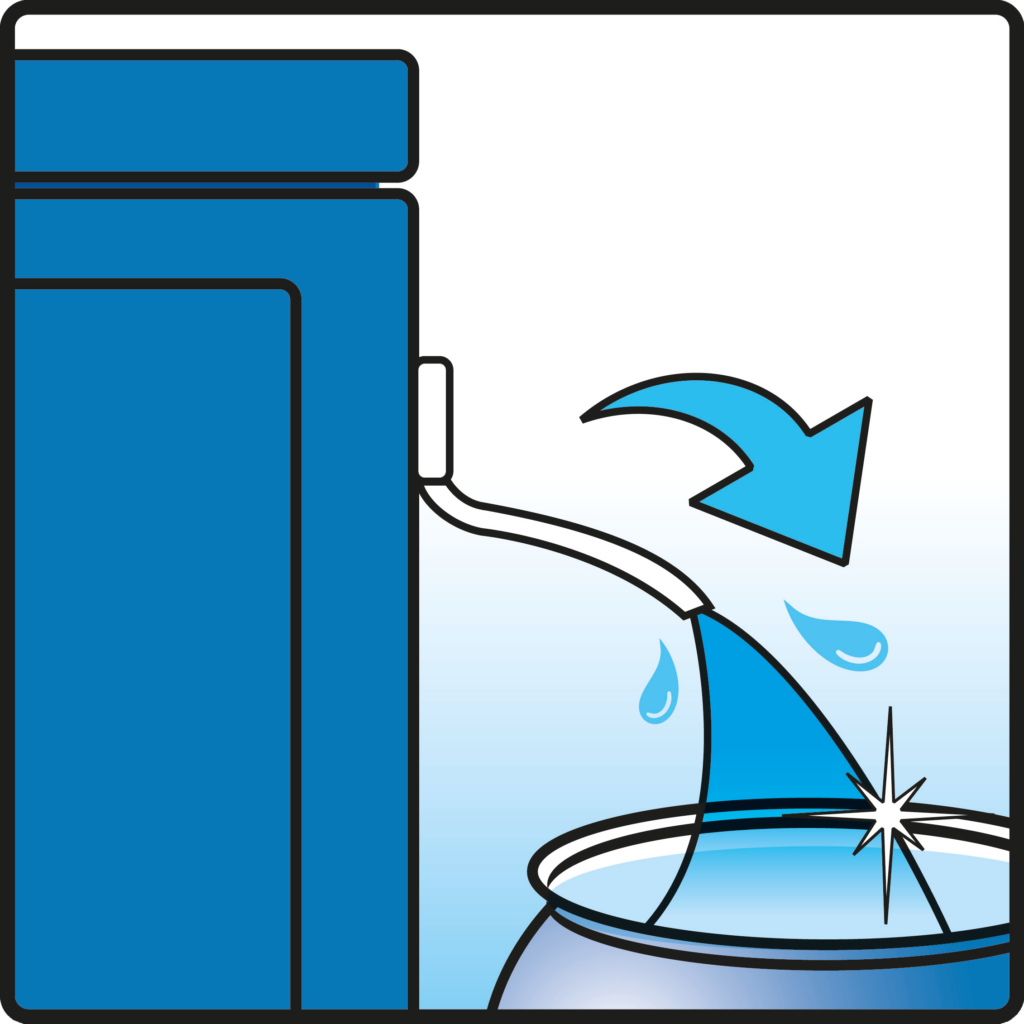
The principle is simple: raw water is poured in at the top and passes through the membrane module solely by gravity, using very low pressure. During this process, PAUL retains turbidity, particles, and pathogens. Clean water is collected inside and can be tapped via the outlet hose.
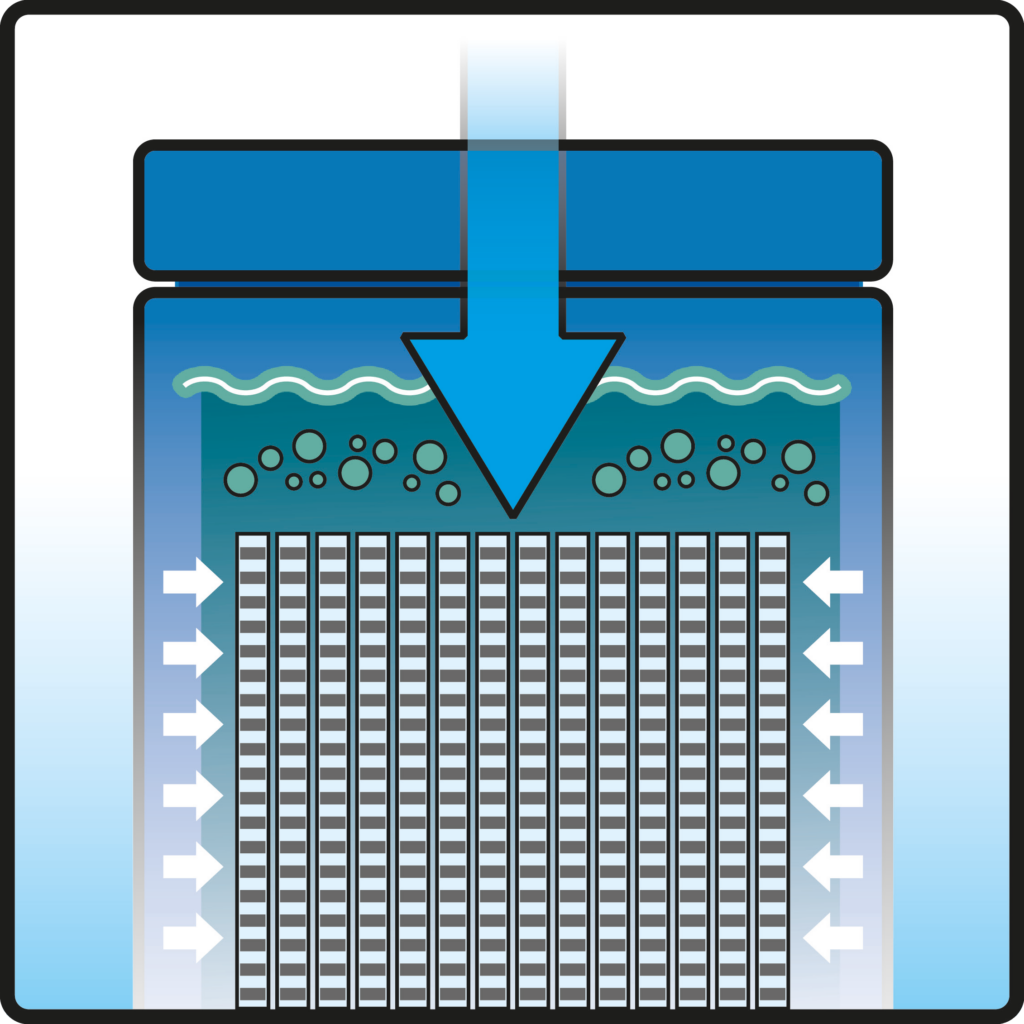
PAUL operates using ultrafiltration at very low pressure. This pressure is generated solely by the weight of the water inside PAUL, up to a maximum of approximately 0.08 bar. As a result, the system requires no electricity, pumps, or chemical additives.
1
Raw water is poured in
2
Gravity creates pressure
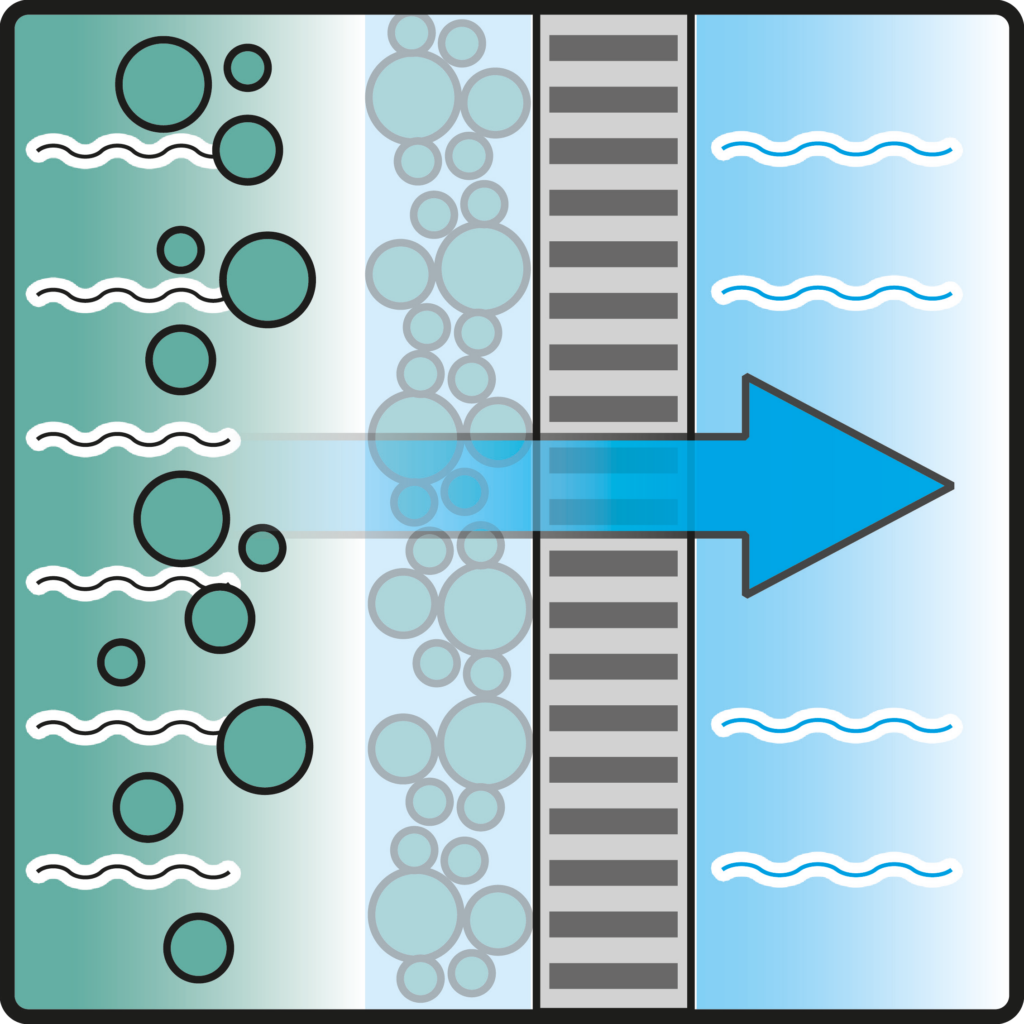
3
Membrane retains particles and pathogens
4
Filtered water can be tapped and collected
How the membrane module works
At the core of PAUL is a membrane module with 50 membrane sheets and a total of 100 membranes. Each sheet carries two membranes. The filtered water is collected inside and directed into a collection channel.
The membrane has a typical pore size of 35 to 100 nanometers. Pores of this size are extremely fine—100 nanometers correspond to roughly one thousandth of the diameter of a human hair.
During filtration, suspended solids, particles, as well as bacteria and viruses are retained on the membrane. Over time, a filtration layer forms, which further enhances the filtration process.
PAUL is not suitable for saltwater or chemically contaminated water.
Suitable
Surface water such as rivers, streams, lakes
Well water
Rainwater
Not suitable
Saltwater
Chemically contaminated water
Technical facts at a glance
Pressure principle
Gravity-driven, max. approx. 0.08 bar
Filtration
Ultrafiltration with flat-sheet membranes
Membrane module
50 membrane sheets
Pore size
35–100 nm
Membrane area
Approx. 10 m²
Capacity
Minimum 1,200 liters per day In practice: 2,000 to 6,000 liters per day have been reported
Lifetime
10+ years
Pathogen reduction
Over 99.99%* of viruses and bacteria
Spare parts
No spare parts required
*As tested by Fresenius Institute and German Federal Environmental Agency
Robust in Operation
PAUL is designed for simple and robust use. The system operates with minimal technology, requires no electricity, and does not need chemical additives. Ongoing effort is also minimal: the membrane is designed for a service life of more than ten years, and no spare parts are required.
A technical advantage lies in the system design: deposits are carried downward by gravity. This helps keep the membrane functional and prevents clogging.
Developed at the University of Kassel
PAUL was developed at the Department of Urban Water Management at the University of Kassel and has been scientifically tested. The technology is based on the work of Prof. Dr.-Ing. Franz-Bernd Frechen and combines technical robustness with deliberately simple application in the field.
This website uses cookies to improve your experience. We'll assume you're ok with this, but you can opt-out if you wish.AcceptRejectRead More
Privacy & Cookies Policy
Privacy Overview
This website uses cookies to improve your experience while you navigate through the website. Out of these, the cookies that are categorized as necessary are stored on your browser as they are essential for the working of basic functionalities of the website. We also use third-party cookies that help us analyze and understand how you use this website. These cookies will be stored in your browser only with your consent. You also have the option to opt-out of these cookies. But opting out of some of these cookies may affect your browsing experience.
Necessary cookies are absolutely essential for the website to function properly. This category only includes cookies that ensures basic functionalities and security features of the website. These cookies do not store any personal information.
Any cookies that may not be particularly necessary for the website to function and is used specifically to collect user personal data via analytics, ads, other embedded contents are termed as non-necessary cookies. It is mandatory to procure user consent prior to running these cookies on your website.